



How AI Video Detection Is Catching Up With Generative Video?
As AI-generated videos become harder to distinguish from real footage, detection tools, watermarks, and content provenance are becoming important ways to check where a video came from.

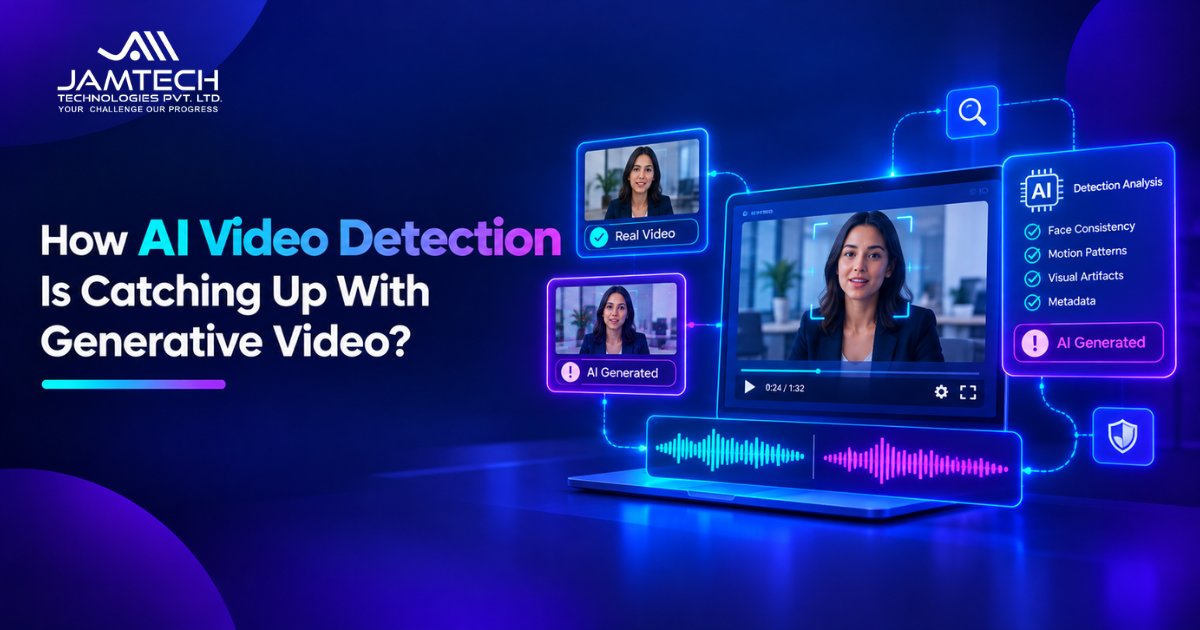
What Makes AI-Generated Videos Difficult to Identify?
AI video generation has improved quickly. Earlier generated videos often contained obvious problems with faces, hands, movement, or lighting. Newer systems can produce much more convincing footage.
There is another problem too. Videos shared online are often cropped, resized, compressed, or edited. These changes can remove some of the subtle signals that detection systems use.
Research presented at ICLR 2026 found that common preprocessing such as resizing and cropping can make synthetic-video detection more difficult. Researchers are therefore testing approaches that can preserve useful information during analysis.
That makes AI video detection a moving target. As generation systems change, detection methods have to adapt as well.
How Does AI Video Detection Work?
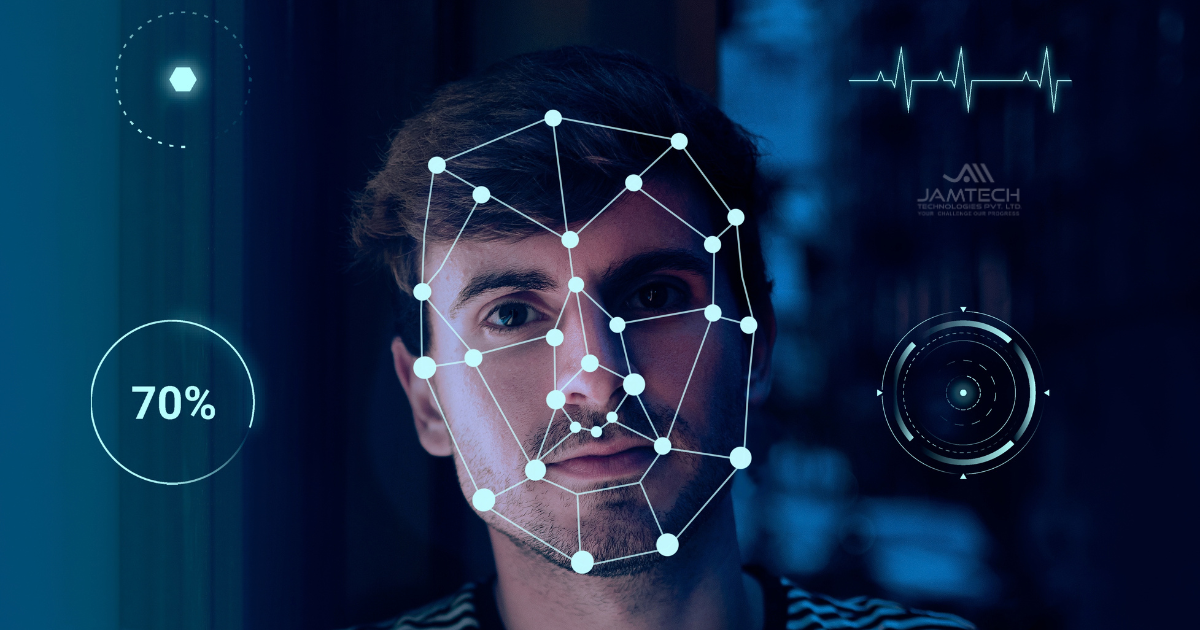
AI video and AI voice agents detectors analyze a video for patterns that may indicate synthetic generation or manipulation.
Depending on the system, this can involve looking at individual frames, movement between frames, visual inconsistencies, audio, compression patterns, or other characteristics of the media.
Some newer research is also focused on detectors that can work across different video-generation systems instead of being trained for only one model.
The goal is to identify signals that remain useful even after a video has been edited or compressed.
Can AI Detectors Prove That a Video Is Fake?
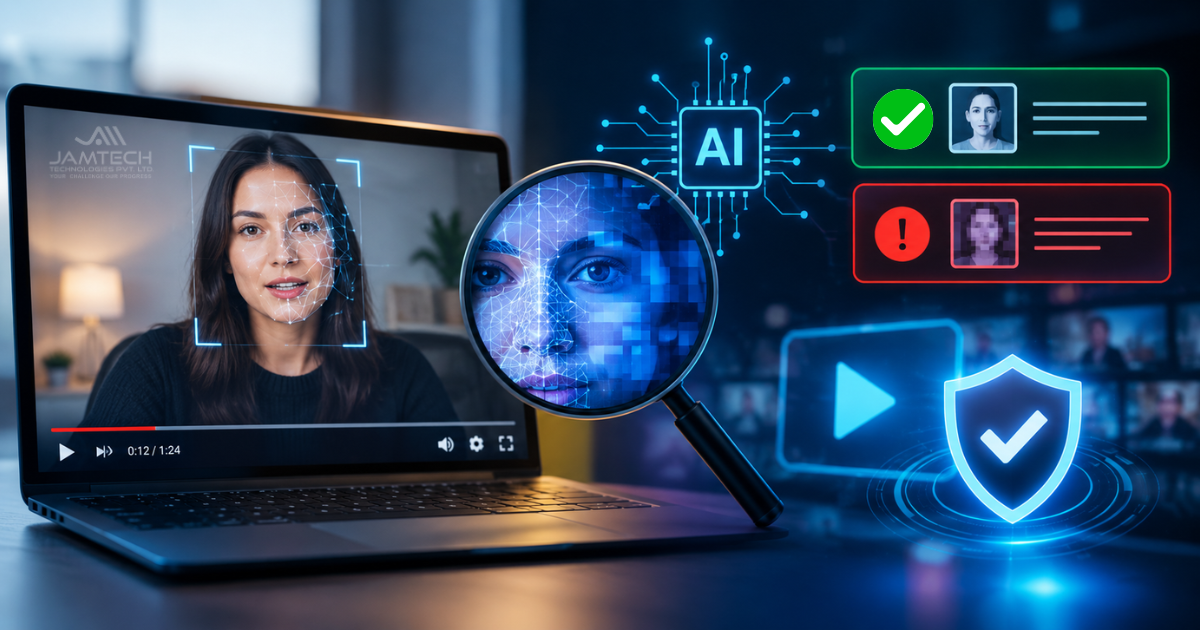
Usually, a detector result should be treated as evidence rather than absolute proof.
A detection system can identify patterns associated with generative AI content, but its performance depends on factors such as the video-generation model, the detector's training data, and how the video has been processed.
A system trained on older generators may perform differently when analyzing footage created by a newer model.
This is why verification is increasingly moving toward multiple sources of evidence instead of relying on one detector result.
What Are Content Credentials and Why Do They Matter?
Content Credentials take a different approach to verification.
Instead of asking whether a video looks AI-generated, provenance systems can record information about where digital content came from and what happened to it.
The C2PA standard supports machine-readable, tamper-evident provenance information. This can include details about how media was created or modified and whether AI was involved.
For example, provenance information can help answer questions such as:
Was the video captured by a camera?
Was AI used to generate or modify it?
Which tool created or edited the media?
What changes were made after the original file was created?
Content Credentials do not automatically prove that every piece of media is authentic. They provide useful provenance information when it has been recorded and preserved.
How Are Watermarks Being Used to Identify AI-Generated Video?
Watermarking is another approach to identifying synthetic content.
An AI system can embed a signal into generated media that can later be checked by another system. Some watermarking techniques place the signal directly into the media instead of relying only on ordinary file metadata.
This can help the signal survive certain types of editing.
Watermarks still have limitations. Some transformations can make them harder to detect, and content without a detectable watermark cannot automatically be assumed to be human-created.
For this reason, watermarking works best as one part of a wider verification process.
Is AI Video Detection Becoming a Race Between Generators and Detectors?
In many ways, the two fields are developing alongside each other.
Video-generation systems are designed to create increasingly realistic footage. Detection researchers are looking for the traces those systems leave behind.
A detector may perform well against current generation methods and then face new challenges when another model produces different patterns.
Recent research has therefore focused on testing detection systems against multiple video generators and real-world changes such as resizing and re-compression.
The question is becoming less about whether a detector can identify today's synthetic videos and more about how well it can adapt to tomorrow's.
What Is the Difference Between AI Detection and Content Provenance?
They answer different questions.
AI detection examines the media itself and looks for evidence that it may have been generated or manipulated by AI.
Content provenance records information about the media's origin and history when that information is available.
A detector might indicate that a video contains patterns associated with synthetic generation. A provenance record might show that a particular file was created using an AI system and later edited.
Using both can provide more context than relying on either method alone.
Can People Still Tell If a Video Is AI-Generated by Watching It?
Sometimes, but visual inspection is becoming less reliable.
Certain videos may still contain noticeable problems with movement, reflections, facial expressions, physics, or other details. But those clues are becoming harder to rely on as generation technology improves.
For important decisions, checking the original source, looking for provenance information, and using appropriate detection tools can provide stronger evidence than simply watching the video repeatedly.
Why Does AI Video Verification Matter for Businesses?
Businesses use video across advertising, training, product demonstrations, social media, customer communication, and other areas.
When synthetic footage is presented as real, it can create confusion about what actually happened. Verification can therefore matter to teams that publish, review, moderate, or archive digital media.
A practical verification process could start with the original file, check available provenance information, look for supported watermark signals, and then use AI detection when appropriate.
The exact process depends on the type of content and how important the verification decision is.
What Should Companies Consider When Choosing an AI Video Detection System?
Companies should evaluate a detection system against the type of videos they actually handle.
Some useful questions include:
What types of AI-generated videos can it analyze?
Has it been tested against newer generation models?
How does compression affect its results?
Can it analyze longer videos?
Does it explain the evidence behind its result?
Can it work alongside provenance and watermark checks?
How does it handle uncertain results?
A strong result on one benchmark does not necessarily show how a detector will perform on every company's own video library.
Where Is AI Video Verification Heading?
AI video verification is moving toward several layers of evidence.
Detection systems can analyze the media itself. Watermarks can provide another signal. Content Credentials can provide information about provenance. Human review can bring those pieces together when the decision is important.
C2PA's work is part of this broader shift toward recording and communicating information about the origin and editing history of digital content.
There may not be one universal test that answers every question about whether a video is real. Instead, verification is increasingly about combining the available evidence and understanding what each signal can actually tell you.
FAQ
Q1: What Is AI Video Detection?
AI video detection uses software to analyze video for patterns that may indicate that it was generated or manipulated using artificial intelligence.
Q2: Can AI Detectors Reliably Identify Every Fake Video?
No. Detection performance can vary depending on the generation model, video quality, compression, editing, and the data used to train the detector.
Q3: What Are Content Credentials?
Content Credentials are provenance information that can record details about how digital media was created or modified. C2PA provides an open standard for this type of information.
Q4: Are AI Watermarks the Same as AI Detectors?
No. A watermark adds a detectable signal to generated media, while a detector analyzes the media for evidence of synthetic generation. They can be used as separate verification methods.
Q5: Does the Absence of an AI Watermark Mean a Video Is Real?
No. A missing watermark or provenance record does not prove that a video was recorded by a person. The signal may not have been added, may not be supported, or may have been removed during processing.
Ready to grow your business with Jamtech?
Talk to our experts about your next digital project.