



How Is AI Changing What Employers Expect From Entry-Level Hires?
AI is taking over some routine tasks once handled by junior employees. Learn how this shift is changing entry-level hiring, the skills employers value, and the way companies train new talent.

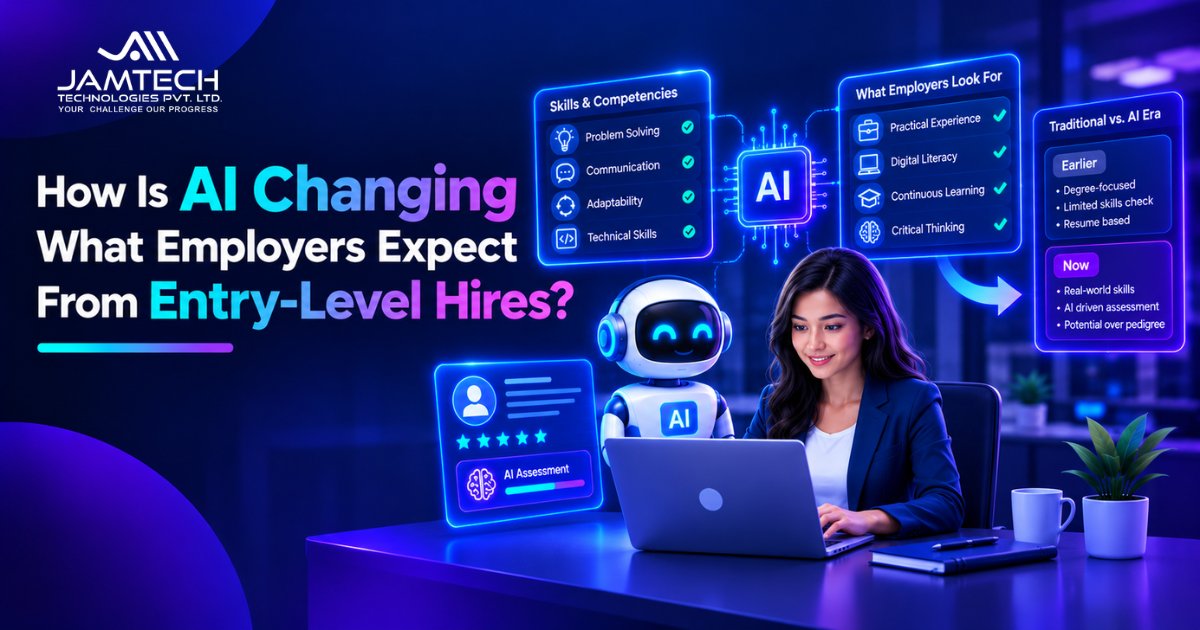
Why Are Companies Rethinking Entry-Level Hiring Because of AI?
For many years, entry-level jobs gave new employees a chance to learn through everyday work. A junior developer might fix small bugs, a marketing assistant might prepare research, and a new analyst might clean spreadsheets or update reports. These tasks helped employees understand how a business worked before they took on more responsibility.
AI tools can now handle parts of this work. They can draft documents, summarize information, generate code, and prepare first versions of reports. This gives employers a reason to review how much time and money they spend on routine tasks.
However, automating a task does not automatically remove the need for the person who once performed it. Someone still needs to check the output, understand the context, and decide what should happen next.
Businesses considering AI systems for practical business use need to look at the full workflow, including where human review is still required. The hiring question is becoming less about how many basic tasks a new employee can complete and more about how quickly that employee can learn, assess information, and contribute to the team.
Which Entry-Level Tasks Can AI Handle Today?
AI's effect varies by role, industry, and the tools available. It tends to be most useful for tasks with clear instructions, repeatable steps, and results that can be checked.
Research and documentation
AI can summarize long documents, organize notes, create first drafts, and help employees gather background information. A junior employee may spend less time preparing a report from scratch and more time checking its accuracy, finding missing details, and adapting it for the intended audience.
The work still needs review. AI can overlook important context or present incorrect information confidently, so speed alone is not a reliable measure of quality.
Basic coding and software testing
Coding assistants can suggest code, explain errors, generate simple tests, and help developers understand unfamiliar code. These tools can reduce the amount of routine work involved in a software project.
That does not mean a beginner can safely accept every suggestion. New developers still need to understand the code, test edge cases, and learn how the application behaves as a whole. Jamtech's article on how AI automation is changing web development covers similar changes in development workflows.
Data preparation and routine reporting
AI-supported tools can categorize records, identify patterns, and prepare summaries from structured data. Employees may spend less time moving information between files and more time checking whether the results make sense.
Businesses can also use workflow automation to reduce repeated manual work. The important distinction is that automation works best when the process is clear. Unusual cases, unclear data, and decisions with real consequences may still need a person to step in.
What Skills Do Employers Need From Junior Employees Now?
When AI can produce a first draft or complete a basic task, employers need to know whether a new hire can judge the result and improve it.
Several skills matter here:
Critical thinking: Spotting errors, questioning assumptions, and deciding whether an answer makes sense.
Communication: Explaining a problem clearly, asking useful questions, and sharing findings with colleagues.
AI literacy: Knowing which tools to use, how to give them instructions, and where their results may be unreliable.
Problem-solving: Working through unfamiliar situations rather than relying on a prepared answer.
Subject knowledge: Understanding the basics of a field well enough to recognize mistakes and make informed decisions.
These skills do not replace technical knowledge. They help employees use it more effectively.
For example, a junior analyst who can generate a chart with AI still needs to understand what the figures represent. A new developer should be able to explain why a suggested code change works, not simply demonstrate that a tool produced it.
Employers can build these expectations into their training and assessment processes. They can also use AI development practices that include evaluation and monitoring when building internal tools, so employees learn to assess outputs rather than treat them as automatically correct.
Does AI Make It Harder for Fresh Graduates to Get Their First Job?
It can make the first step more difficult in some fields, especially where employers previously relied on junior staff for routine tasks. If those tasks are automated and companies do not redesign their roles, fewer traditional openings may be available.
But the overall picture is not the same across every industry. Some businesses may reduce hiring for certain tasks, while others may need people who can work with AI tools, review their results, and apply them to real business problems.
The challenge for graduates is that many of the skills employers now expect are developed through experience. A person cannot demonstrate years of workplace judgment immediately after finishing a degree.
This creates a responsibility for employers. If they expect new hires to check AI-generated work, solve unfamiliar problems, and understand business context, they need to provide opportunities to learn those skills. Removing routine work without creating another route to practical experience can make it harder to develop the next generation of experienced employees.
How Can Companies Train Junior Employees When AI Does the Routine Work?
Companies can redesign junior roles around learning, review, and gradually increasing responsibility instead of relying entirely on repetitive tasks.
One approach is to let AI prepare a first version of the work and ask the junior employee to verify it. For example, a new analyst could review an AI-generated report, trace important figures back to their sources, and explain any inconsistencies.
A junior developer could review generated code, write tests for unusual cases, and discuss the design choices with a senior engineer. A marketing assistant could check a draft for factual accuracy, audience fit, and tone before it goes to a client.
Managers should also provide feedback. Simply assigning employees to check AI output is not enough if nobody explains what a good review looks like. Mentoring, code reviews, supervised projects, and regular feedback help new staff build skills they can use independently later.
For teams adopting AI-assisted workflows for business operations, it is useful to define which steps AI can handle, which decisions require employee approval, and who is responsible when something goes wrong. Clear boundaries help junior employees learn without giving them responsibility they are not yet ready to manage.
Can AI Create New Opportunities for Early-Career Professionals?
Yes, although the opportunities depend on how companies adopt the technology. AI can help smaller teams take on work that previously required more manual effort. It can also create a need for people who can test tools, review outputs, organize data, document processes, and help colleagues use new systems.
Some roles may change rather than disappear. A junior employee who once spent most of the day preparing reports might move toward interpreting results and explaining them to a team. A developer may spend less time writing repetitive code and more time testing, debugging, and understanding user requirements.
There are also opportunities to learn how AI tools fit into specific industries. Understanding a business process, its customers, and its risks can be just as important as knowing how to operate a particular tool.
For employers, the practical question is how to introduce AI without losing the entry-level work through which future specialists develop. A useful starting point is to review the tasks being automated and identify which new responsibilities can help junior staff build toward more advanced roles.
How Can Graduates Prepare for AI-Changed Entry-Level Jobs?
Graduates do not need to master every new AI tool. They need a solid foundation in their chosen field and the ability to use relevant tools thoughtfully.
A practical starting point is to build a small portfolio. A developer could document a project, explain the decisions behind the code, and show how they tested it. An analyst could present a short data project and explain the limits of the findings. A marketing graduate could show how they researched a topic, checked claims, and edited an AI-assisted draft.
Internships, open-source contributions, personal projects, and supervised work can also provide evidence of practical ability. The important part is to show the process, not only the final output.
Graduates should be ready to explain where they used AI, what they changed, how they checked the result, and what they learned. Being honest about the tool's contribution is more useful than claiming every part of the work was completed manually.
What Should Employers Measure When Hiring Junior Talent?
Hiring assessments should reflect the work employees will actually do. If AI tools are part of the workplace, banning them from every assessment may not show whether a candidate can perform well in the real role.
Employers can use short practical tasks that allow candidates to explain their decisions. For example, a candidate might review an AI-generated report, find errors in a code sample, or explain how they would verify a research summary.
The assessment should look at reasoning, accuracy, communication, and the ability to learn from feedback. It should also distinguish between a skill the candidate is expected to have on day one and one the company plans to teach.
Businesses building AI-enabled products may need a mix of technical and operational skills across their teams. Jamtech's AI and automation capability overview provides context on the range of AI capabilities businesses are adopting. For employers, the broader lesson is to define the actual responsibilities of a role before deciding which skills are essential.
Will AI Replace Entry-Level Jobs Completely?
No single outcome applies to every role. AI can reduce demand for some routine tasks, change the responsibilities attached to existing jobs, and create new work around using and checking AI systems.
The greater risk is that companies remove junior positions without replacing the learning opportunities those roles once provided. Senior employees do not appear fully trained overnight. They usually develop through years of practice, feedback, and increasing responsibility.
Employers that plan for this transition can automate suitable tasks while creating structured ways for new hires to learn. Graduates who combine subject knowledge with sound judgment and practical AI skills can prepare for roles that are changing.
The key question is not whether AI can do junior work. It is how businesses will redesign entry-level jobs so people can still gain the experience needed to grow.
Frequently Asked Questions
Q1: Is AI reducing entry-level jobs?
AI may reduce demand for some entry-level tasks and affect hiring in certain roles. The impact varies by industry and employer. Some companies may reduce routine work, while others may hire people who can use AI tools and review their output.
Q2: What skills should fresh graduates learn to work with AI?
Graduates should develop skills relevant to their field, along with critical thinking, communication, problem-solving, and the ability to verify AI-generated information. Practical projects can help demonstrate these abilities.
Q3: Can AI replace junior software developers?
AI can generate code, suggest fixes, and help with routine testing. Junior developers are still needed to understand requirements, review code, test edge cases, debug problems, and learn how larger systems work.
Q4: How can companies help junior employees gain experience when AI automates basic tasks?
Companies can assign supervised review tasks, practical projects, mentoring sessions, and progressively more complex responsibilities. Managers should explain how to assess AI output and give regular feedback.
Q5: Will AI create new jobs for fresh graduates?
AI may create opportunities in areas such as tool evaluation, data quality, workflow support, and AI-enabled product development. The number and type of roles will depend on how organisations adopt the technology.
Ready to grow your business with Jamtech?
Talk to our experts about your next digital project.