



Turn Scripts Into Visual Stories With Creative Control
Published:
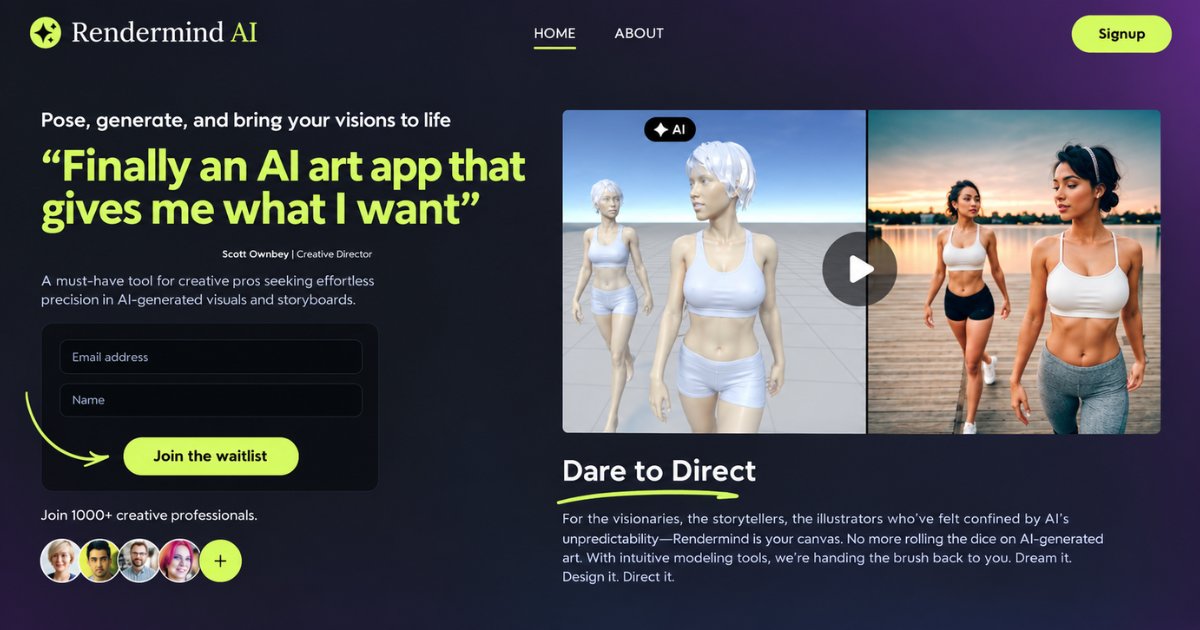
RenderMind helps artists and storytellers create AI-powered storyboards with consistent characters, adjustable poses, cinematic composition, and visual styles that support their creative direction.
RenderMind helps artists and storytellers turn scripts and creative ideas into visual storyboards using AI. Creators can shape character poses, maintain visual consistency, adjust artistic styles, and refine images while keeping control over the final result. The platform reflects advances in generative AI development, where models support creative production. A clear website development approach also helps make complex creative tools easier to navigate from the first prompt through the final storyboard export.
Project details
- Industry
- Artificial Intelligence and Creative Technology
- Service
- AI-Powered Creative Platform Development
- Duration
- Undisclosed
- Stack
-
- Python
- ReactJS
- Node.js
- Laravel
- AWS
- ControlNet
- AI
- Generative AI
Giving Creators More Control Over AI Storyboarding
RenderMind was built around a practical challenge for visual storytellers: turning scripts and creative ideas into usable storyboards without losing control over the details. The platform combines AI-generated imagery with tools for character consistency, 3D posing, visual style selection, and image refinement. Creators can develop scenes, adjust compositions, and prepare visual sequences while keeping their artistic direction central to the process. Its approach connects with wider advances in AI-powered creative workflows, where technology supports repeatable tasks without removing human judgment. The platform also reflects the potential of custom AI applications that bring specialized capabilities into one workspace for a defined audience.
Script-to-Storyboard Generation
Transforms scripts and written scene descriptions into visual storyboard sequences, giving creators a starting point for planning shots and developing narratives.
Consistent Character Design
Helps maintain character appearance across multiple frames so visual sequences feel connected rather than like unrelated AI-generated images.
Interactive Pose and Composition Control
Uses 3D character posing and visual controls to help creators guide body positions and frame composition toward their intended scenes.
Flexible Visual Refinement
Supports artistic style adjustments and image refinement so creators can develop visuals that better match the tone and direction of their projects.
Problems
Creating storyboards from scripts takes time when artists must plan shots, draw characters, maintain visual continuity, and revise scenes while meeting production deadlines and creative expectations.
- Turning a written script into clear visual frames can require hours of manual planning and illustration before production begins.
- Characters may look different across generated frames which makes it harder to maintain a consistent visual identity throughout a story.
- General AI image tools can produce unexpected poses and compositions that do not match the creator's intended scene.
- Revising generated artwork can take extra effort when creators lack direct control over specific visual details.
- Switching between image generation and editing tools can interrupt the creative process and scatter project assets.
- Preparing a complete storyboard manually can slow down teams that need to review scenes before production starts.
Solutions
RenderMind combines AI storyboarding with character controls, pose editing, visual refinement, and sequence management to help creators develop coherent scenes with greater control and less manual effort.
- AI-assisted storyboard generation turns written scripts into visual frames and gives artists a faster starting point for production planning.
- Character consistency tools help preserve the same character appearance across multiple frames throughout a visual story.
- Interactive pose controls let creators guide character positions and compositions toward the intended scene.
- Image refinement tools give creators ways to adjust artwork and correct visual details without restarting every generation.
- A connected creative workspace brings storyboard generation and image refinement together to reduce unnecessary tool switching.
- AI-assisted storyboard creation helps teams prepare visual sequences sooner for review and production planning.
Outcomes & impact
RenderMind brings AI image generation and storyboard controls into one creative platform. It helps artists move from written ideas to visual sequences while retaining control over character appearance, composition, artistic style, and the refinement process.
Faster Visual Planning
Helps creators turn scripts and written ideas into storyboard frames that can be reviewed and refined before production begins.
Greater Character Consistency
Supports a more consistent appearance across storyboard frames to help preserve character identity throughout a sequence.
More Direct Creative Control
Gives artists tools to guide character poses and scene composition instead of relying entirely on the initial AI output.
Flexible Artistic Direction
Offers visual styles and image refinement options that help creators shape artwork around the needs of their projects.
A Connected Creative Workflow
Brings storyboard generation and visual editing capabilities together to help reduce interruptions between creative tasks.
Production-Ready Storyboard Exports
Supports exporting storyboard frames and sequences in formats such as PDF, JPG, and PNG for review and production use.

Building an AI Tool for Creative Professionals?
AI can support creative work when people retain control over the result. Jamtech can help you plan and build a specialized AI platform around your users, workflows, and product goals.