



How FinTech Platforms Use AI to Detect Suspicious Transactions Faster
Learn how FinTech platforms use AI to monitor transactions, identify unusual activity, reduce manual checks, and help financial teams respond to potential fraud faster.

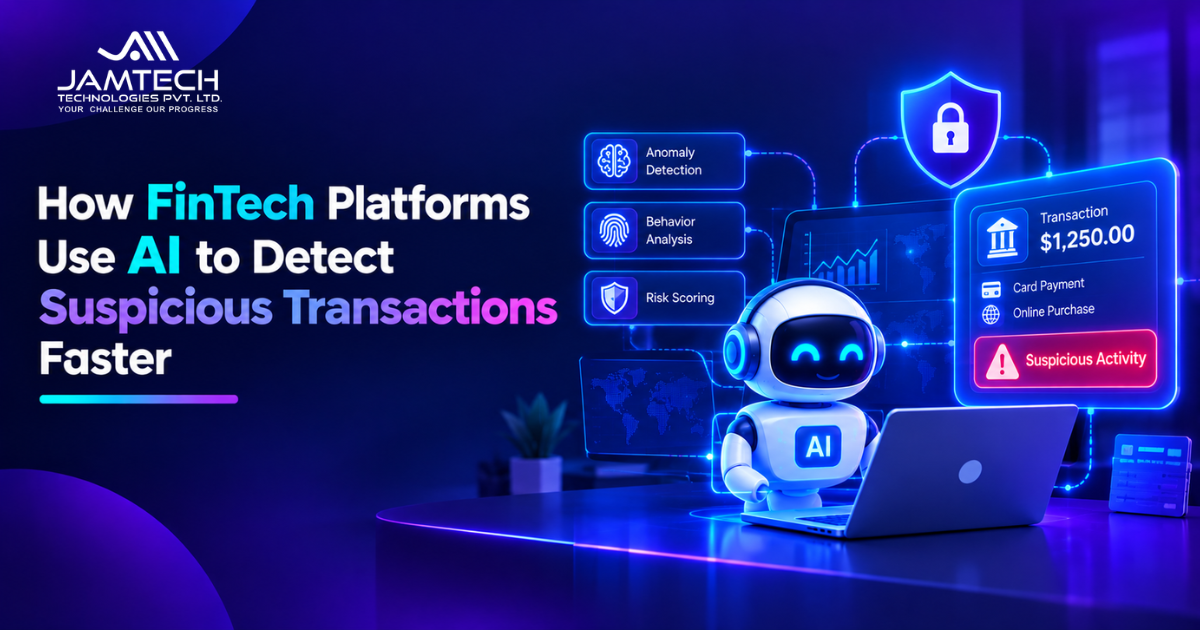
Why Is Transaction Monitoring So Important for FinTech Platforms?
FinTech platforms can process a large number of transactions every day. These may include card payments, bank transfers, digital wallet payments, loan repayments, and other financial activities.
The challenge is identifying transactions that do not fit normal customer behavior.
A simple rule might flag every transaction above a certain amount. That can work for obvious cases, but it can also produce a lot of false alerts.
AI-based transaction monitoring can look at more signals at the same time. Instead of asking only whether a transaction crosses a fixed limit, it can consider whether the activity looks unusual for that particular account or situation.
How Does AI Detect Suspicious Transactions?
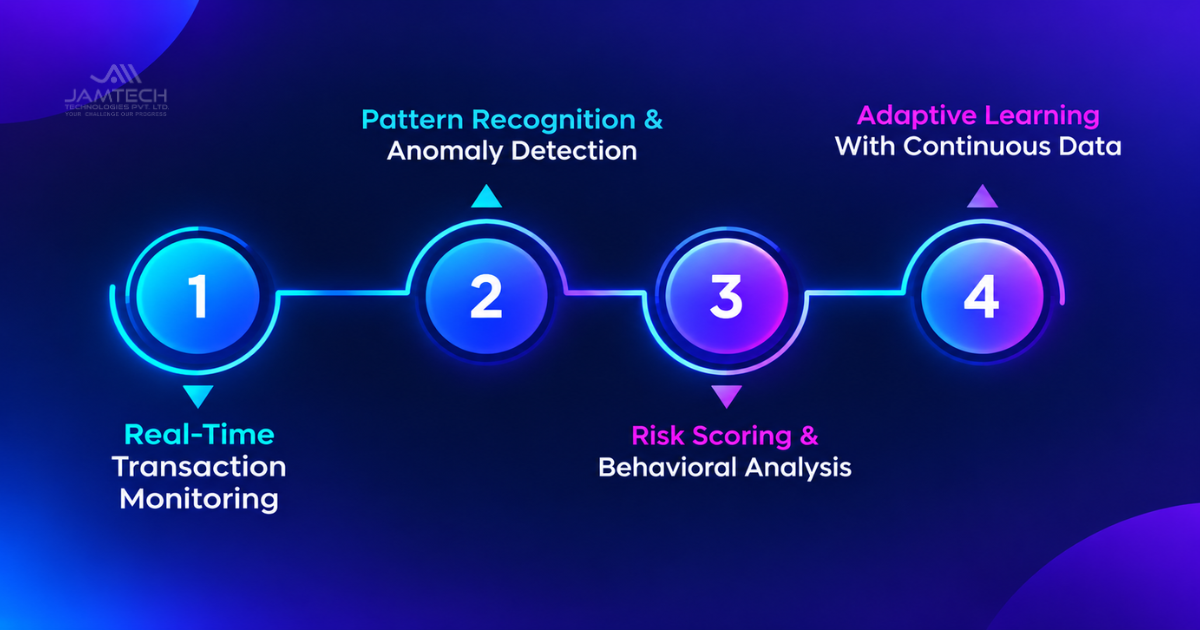
AI transaction monitoring systems learn patterns from financial data and use those patterns to identify activity that deserves attention.
For example, a system may notice changes in transaction frequency, location, payment behavior, account activity, or other signals available to the platform.
The system can then assign a risk level or generate an alert for a transaction that appears unusual.
This does not automatically mean that the transaction is fraudulent. It means the activity may need additional review.
How Is AI Different From Traditional Fraud Detection Rules?
Traditional fraud detection often depends heavily on predefined rules.
For example:
"If a transaction exceeds a certain amount, flag it for review."
Rules are still useful, especially for known risk conditions. But they can struggle when suspicious behavior does not follow a predictable pattern.
AI can help by finding relationships and patterns across larger amounts of data.
A FinTech platform can therefore use rules and AI together rather than treating them as competing approaches.
Can AI Reduce False Fraud Alerts?
It can help, although the results depend on the quality of the data, the model, and how the system is implemented.
A system that flags too many legitimate transactions can create unnecessary work for fraud teams and frustrate customers.
AI can help analyze customer behavior more closely and prioritize alerts based on the available risk signals.
For example, a transaction that looks unusual for one customer may be completely normal for another. A model that considers historical behavior can provide more context than a single fixed threshold.
Where Can AI Services Fit Into FinTech Fraud Detection?
AI services can support different stages of a financial platform's fraud and risk workflow.
They can be used for transaction analysis, document processing, customer verification, risk scoring, alert prioritization, or other parts of the financial workflow.
The important point is that AI does not have to make every decision. It can handle data-heavy analysis while financial teams review cases that need human judgment.
This approach can be particularly useful when a FinTech platform is dealing with a growing transaction volume.
Can On-Device AI Help With Financial Security?
On-device AI can be useful when certain AI processing needs to happen directly on a user's device.
For example, a mobile banking or payment application could use local processing for selected security or authentication tasks without sending every piece of information to a remote server.
The exact use depends on the device, model, security requirements, and financial application.
On-device processing can also reduce dependence on continuous network communication for tasks that can be handled locally.
For transaction monitoring itself, however, many systems still require access to broader account or transaction data, which may need server-side processing.
How Can AI Help Financial Teams Investigate Suspicious Activity?
Finding a suspicious transaction is only the first step.
A fraud or risk team may need to understand why the transaction was flagged, what other activity is connected to it, and whether the customer's behavior provides additional context.
AI can help organize relevant information and prioritize cases for investigation.
This can reduce the amount of time analysts spend manually going through large numbers of routine alerts.
The final decision can still remain with a trained reviewer, particularly when the consequences of blocking a legitimate transaction are significant.
Can AI Voice Agents Help When a Transaction Needs Customer Verification?
A AI Voice Agent can support customer communication when a financial workflow requires a phone-based interaction.
For example, a FinTech platform may need to contact a customer about an unusual transaction, confirm certain information, or guide them through a verification process.
A voice agent can handle routine conversations and collect information before escalating the case to a human employee.
For sensitive financial decisions, the system should follow appropriate authentication, security, privacy, and escalation procedures.
What Role Can an AI Chat Bot Play in Fraud Prevention?
An AI Chat Bot can help customers when they have questions about a payment, account alert, or transaction that has been temporarily restricted.
Instead of requiring a customer to wait for a support representative for every basic question, the chatbot can provide information from approved financial workflows and route more complex cases to the right team.
For example, a customer could ask why a payment needs verification or what steps are required to secure an account.
The chatbot should not be treated as a replacement for secure authentication or human review where those controls are required.
Can Physical AI Be Used in FinTech?
Physical AI has a more limited role in this particular use case because most transaction monitoring happens through software and financial data.
However, physical AI can become relevant where financial services interact with physical environments.
For example, banks and financial institutions may use intelligent machines or automated systems in branches, kiosks, security environments, or other physical operations.
The core transaction-monitoring workflow remains primarily digital.
What Data Does AI Need to Detect Suspicious Transactions?
The data available to an AI system depends on the FinTech platform and its security architecture.
Possible signals can include transaction history, transaction amount, timing, account activity, payment method, location information, device information, and other relevant risk indicators.
More data does not automatically mean better fraud detection.
The data needs to be accurate, relevant, properly protected, and used within the organization's privacy and regulatory requirements.
Should FinTech Companies Fully Automate Fraud Decisions?
Not necessarily.
AI can help identify suspicious activity and prioritize cases, but fully automated decisions can create problems when the system gets a legitimate transaction wrong.
A better approach for many workflows is to define where automation should act and where human review is required.
For example, low-risk activity might pass automatically, while unusual or high-risk cases could be sent to a fraud analyst.
This creates a workflow where AI handles repetitive analysis while people focus on cases that require judgment.
What Should FinTech Platforms Consider Before Using AI for Fraud Detection?
Before implementing an AI-based fraud detection system, a FinTech company should consider:
What types of suspicious activity does it need to identify?
What financial and customer data can the system use?
How will false positives be handled?
When should a case be escalated to a human?
How will the model be monitored as transaction behavior changes?
How will customer data and sensitive financial information be protected?
The technology is only one part of the solution. The surrounding workflow, security controls, data quality, and review process matter just as much.
FAQ
Q1: How Does AI Help FinTech Platforms Detect Suspicious Transactions?
AI can analyze transaction data and customer behavior to identify unusual patterns, assign risk signals, and prioritize transactions that may require further investigation.
Q2: Can AI Services Replace Traditional Fraud Detection Rules?
AI services can complement traditional rules rather than completely replace them. Rules can handle known conditions, while AI can help identify more complex or unusual patterns.
Q3: Can On-Device AI Be Used for Financial Security?
Yes. On-device AI can support selected security, authentication, or privacy-sensitive tasks directly on a user's device, although transaction monitoring may still require server-side financial data.
Q4: Can an AI Voice Agent Contact Customers About Suspicious Transactions?
An AI Voice Agent can support customer verification and routine communication in suitable workflows. Sensitive financial decisions should still follow appropriate authentication and escalation controls.
Q5: How Can an AI Chat Bot Help Customers With Fraud Alerts?
An AI Chat Bot can answer routine questions about account alerts, verification steps, or payment issues and route cases requiring additional investigation to a human support or fraud team.
Ready to grow your business with Jamtech?
Talk to our experts about your next digital project.