


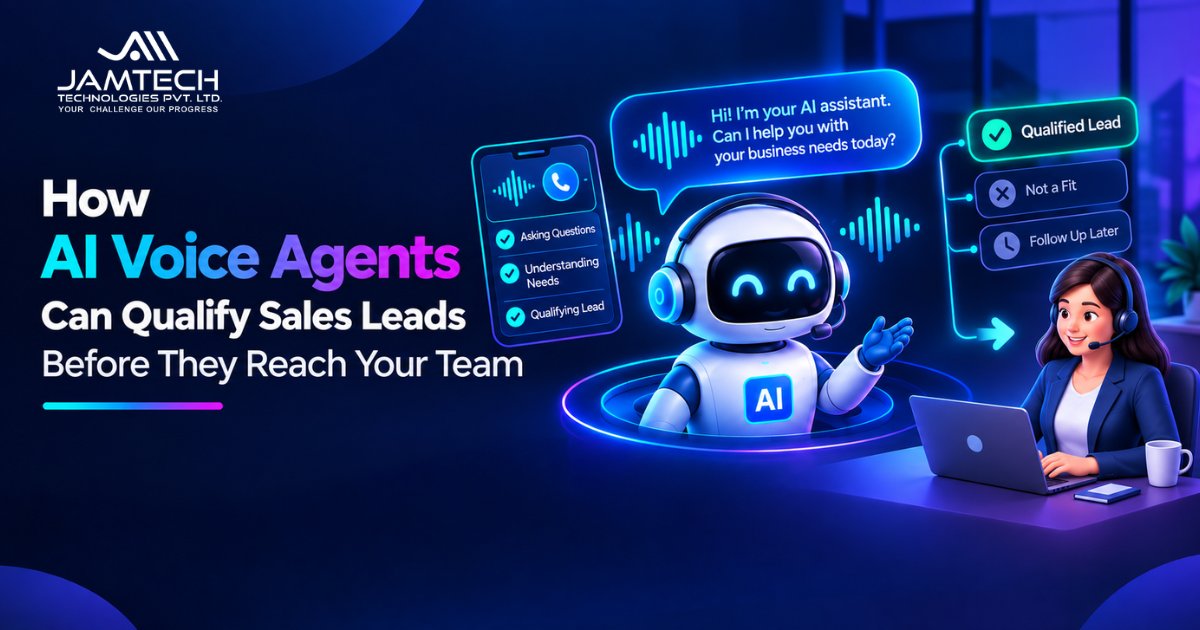
How AI Voice Agents Can Qualify Sales Leads Before They Reach Your Team
See how voice agents can handle the first sales conversation, qualify inbound leads and pass useful context to a human salesperson.

A new lead does not always need a salesperson immediately.
Someone may have filled out a website form, requested a callback, or asked for information about a product. The sales team still needs to know what the person wants, how serious the enquiry is, and what should happen next.
This first conversation can take time, especially when lead volume is high. An AI voice agent can handle part of that process by calling the lead, asking a defined set of questions, and passing the useful information to the sales team.
Recent enterprise use cases show voice AI being used for early-stage outreach, lead qualification, follow-ups, and CRM handoffs.
What the qualification process looks like
The lead enters the system
A lead might come from a website form, campaign, marketplace, or another sales channel.
The system can check basic rules before making a call, such as whether the lead has already been contacted and whether the person has given the required consent.
The AI starts the conversation
The voice agent introduces itself and explains why it is calling.
Instead of reading a long script, it can follow a short qualification flow. For example, a software company might ask what the prospect is looking for, how many users they have, and when they expect to make a decision.
The questions should match what the sales team actually needs.
The agent records the answers
The conversation can produce structured information for the CRM.
A salesperson could see that a prospect is looking for a specific product, has an immediate requirement, and wants to speak with someone about pricing.
That gives the salesperson a starting point instead of another blank lead record.
A qualified lead reaches the sales team
Once the conversation meets the agreed criteria, the lead can be routed to a salesperson.
The AI can also help schedule the next conversation when that is part of the workflow.
The human then handles the part where judgment matters: discussing the solution, answering detailed questions, handling objections, or negotiating.
Where AI voice lead qualification makes sense
Inbound sales enquiries
Businesses receiving a large number of enquiries can use voice agents to make the first call and identify which conversations need immediate sales attention.
Demo and consultation requests
A voice agent can confirm what the prospect wants, gather a few relevant details, and help schedule a conversation with the right person.
Lead follow-up
When sales teams have a backlog of new enquiries, an AI voice agent can make the initial follow-up instead of allowing leads to sit untouched.
After-hours enquiries
A lead that arrives outside normal working hours does not necessarily need to wait until the next morning for a response. A voice workflow can acknowledge the enquiry and collect initial information before a salesperson follows up.
The important part: knowing when to stop
Voice AI works best when its boundaries are clear.
Set qualification rules
Decide what makes a lead worth sending to a salesperson. The rules might relate to product interest, business need, timeline, location, or another factor that matters to the sales process.
Keep the conversation short
The goal is qualification, not a full sales presentation. Asking too many questions can make the call frustrating and reduce the quality of the information collected.
Use human handoffs
Some conversations should move to a person quickly. If a prospect asks a complex question, wants to negotiate, or shows strong buying intent, the AI should make the handoff easy.
The quality of that handoff matters as much as the initial call. Useful context should reach the salesperson so the prospect does not have to repeat everything.
What businesses should automate first
Start with a qualification process that is already clear and repeatable.
If your sales team asks the same basic questions on every first call, that is a reasonable place to test voice automation. Track response time, qualification quality, successful handoffs, and what happens after the salesperson takes over.
Call volume alone does not tell you whether the workflow is working.
Frequently Asked Questions
Q1: What is AI voice lead qualification?
It is the use of a voice-based AI system to speak with potential customers, ask qualification questions, collect their responses, and route suitable leads to a sales team.
Q2: Can an AI voice agent update a CRM?
Yes. When connected to the appropriate business systems, a voice agent can pass information from a conversation into a CRM or another approved workflow.
Q3: Can AI voice agents replace salespeople?
They are better suited to handling repetitive early-stage conversations. Salespeople are still important for complex requirements, negotiation, relationship building, and decisions that require human judgment.
Q4: What questions should an AI voice agent ask?
The questions depend on the sales process. A useful starting point is to ask about the prospect's requirement, intended use, timeline, and any other information the sales team needs before taking over.
Q5: How do you measure an AI voice qualification workflow?
Useful measures include lead response time, qualification accuracy, successful human handoffs, meeting rates, and conversion after the handoff.
Ready to grow your business with Jamtech?
Talk to our experts about your next digital project.